Interesting vidoes to follow
·My phd is stagnant and I know/understand how to do research. I had just a vague idea of research. But I dont think that vague idea is helping me anymore. I am trying to understand the research from two perspective - problem solving and project perspective. Project perspective I have got enough strategies and I know just finding how the work is done is not the work itself. This is just another effort to understand the psychology behind understanding the problem solving and how to actually study concepts from a problem solving and this is still not the actual work. It is an effort to give myself direction and method that how should I do research. The following writing is based on these two goals only :
- understand the psychology behind the problem solving and finding the tools or methods that of problem solving
- common tools, procedures or concepts that I can use to move ahead in research
So I watched these two videos. And the videos were about problem solving and learning new concepts.
1) Unlocking Your Intuition: How to Solve Hard Problems Easily
2) Focusing Your Unconscious Mind: Learn Hard Concepts Intuitively (And Forever)
problem solving :
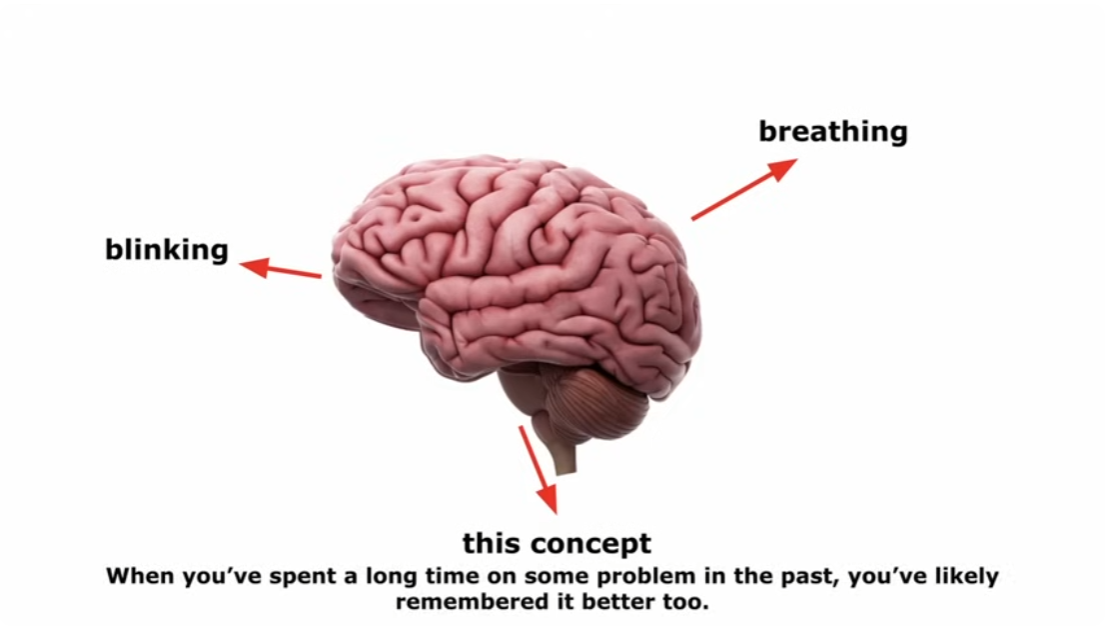
- the most important point that was talked in the video was about intuition. That is transferring a problem from conscious to unconscious. No matter how much you try to solve problems consciously, unconscious mind is always faster than that and thats where intuition resides. And how you attain intuition about something.
-
He also said that there is difference between intuition and insight. what is the difference between intuition and insight? intuition - On the basis of past knowledge and pattern recognition to provide an instant gut feeling solution. insight - It involves deep reflective thought rather than instant recognition. While intuition offers solutions based on past experiences, insight is responsible for generating new, original solutions to problems.
- how to transfer knowledge from conscious to unconscious?
- mental mapping - associations between problem components and solution ideas.
- deliberate practice and exposure - solve as many problems as possible you will learn to recognize a pattern like what is the possible solution
- justification and verification - Because intuition is unconscious, it can sometimes be wrong. You must pair your intuitive “guesses” with your slow, logical brain by practicing proofs or small example cases. This verifies your intuition and ensures you aren’t being led down a wrong path.
- passion and interest - focusing on your passion for a subject makes the process of building intuition much faster.
- how to use these tools of problem solving for research ?
-
1. Developing Research Intuition through Mental Mapping (08:50 - 10:07) Just as the creator maps programming problems to solution components, you can map complex research topics to key concepts or methodologies:
- Create a conceptual map: When reading a new research paper, instead of just reading, extract the core research question, the methodology used, and the primary results.
- Categorize findings: Organize these snippets into a personal database (like a Zettelkasten or note-taking app). Over time, your “intuition” will improve as you instantly recognize common patterns across different papers (e.g., “this study uses a longitudinal design to address causality, similar to that other paper I read”).
2. Balancing “Fast” Intuition with “Slow” Logical Rigor (05:39 - 07:21) Research requires a balance between your intuitive hypothesis-making and formal verification:
- Intuitive Hypothesis: Allow yourself to quickly generate potential explanations for your observations. This is your “fast brain” working based on past literature.
- Logical Verification: Always follow up by stress-testing those hypotheses. Use the “proof” concept (06:09) by checking against null results, performing sensitivity analyses, or consulting methodological literature to ensure your intuition isn’t biased.
3. Exposure over Perfection (07:55 - 09:48) If you are feeling stuck on a difficult research problem:
- Read more, solve less: Instead of obsessing over one paper you don’t understand, look at the solutions or conclusions in several papers within that niche. This builds your mental library of potential approaches, allowing your intuition to recognize familiar structures in future, more challenging papers.
4. Maintain High-Level Engagement (14:47 - 15:33)
- Cultivate Curiosity: The creator emphasizes that passion makes the brain more effective at building unconscious patterns. Focusing on the “why” behind your research question will help your brain categorize information more deeply and improve your ability to intuitively navigate the field.
-
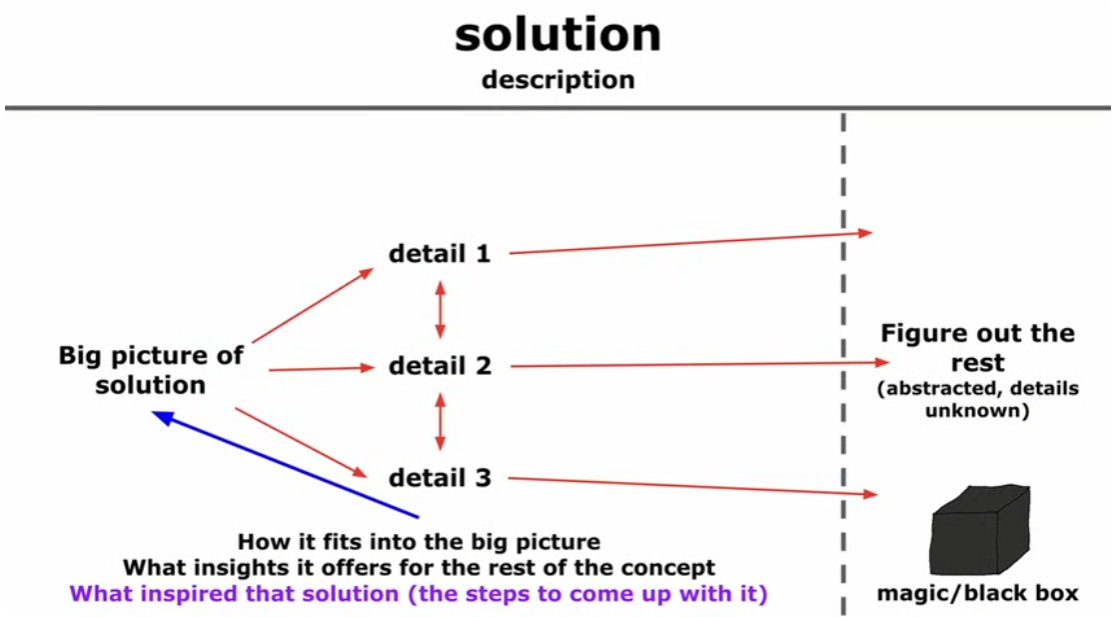
==what approach I am following now and what the video suggests?
learn the concept intuitively :
==why learning a concept inuitively is important for problem solving and research :== Learning a concept intuitively—understanding it as a fundamental truth rather than just memorizing rules—is critical for high-level problem solving and research
-
Generative Problem Solving: Intuition turns you into an “insight machine” (2:06). When you understand the why and how of a piece, you can better invent or reconstruct solutions from scratch (11:16). This is essential for research, where you are often applying concepts to novel situations where standard algorithms or textbook approaches might not directly apply.
-
Long-Term Retention: Memorization is transient, but building an intuitive framework forges deep mental associations. Because you have “seared the problem” into your mind (7:12), your brain creates a “gap” that is naturally filled by the solution, making the knowledge permanent for years
==what concepts are important for me to research on TAL?==
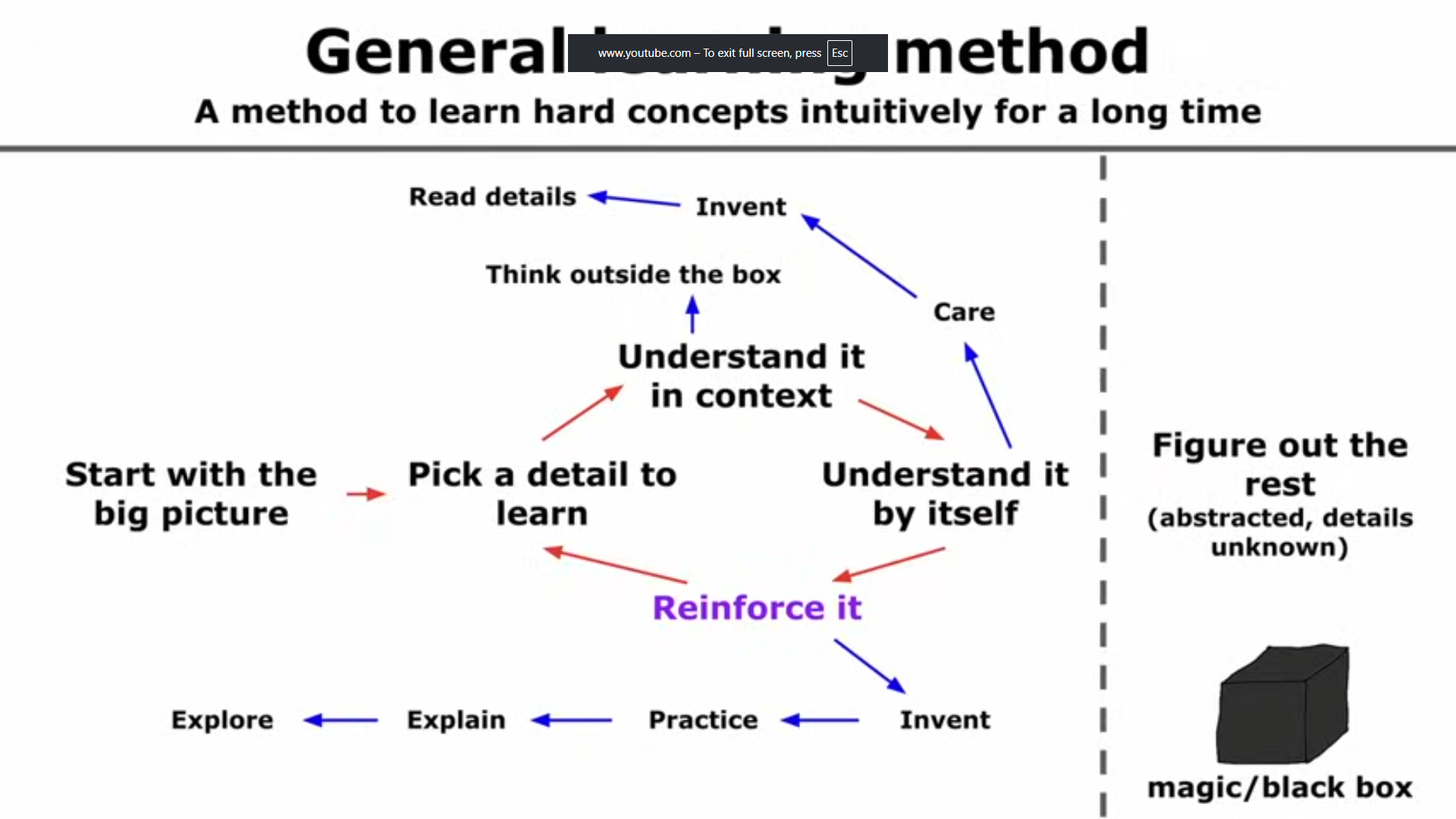 **How to retain concept ? - below are the methods to grasp a concept
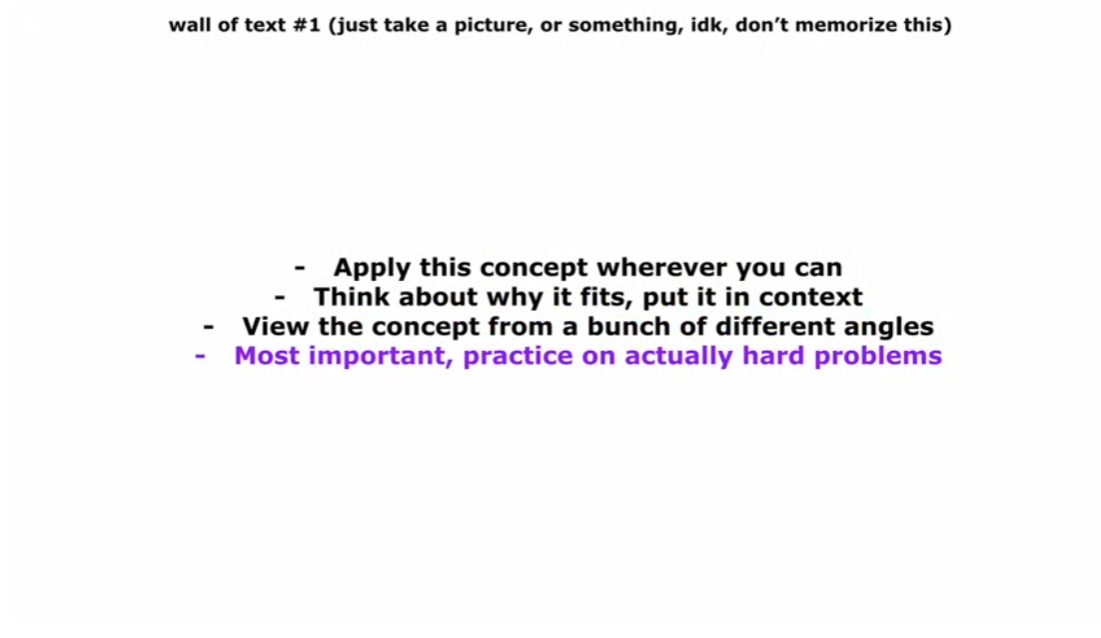
give me four methods to reinforce it according to the video? -
- Invent: Attempt to recreate the concept or piece from scratch to deeply internalize the logic (11:16 - 11:27).
- Practice: Apply the concept to various relevant problems to gain practical experience and see how it fits into different contexts (11:27 - 12:05).
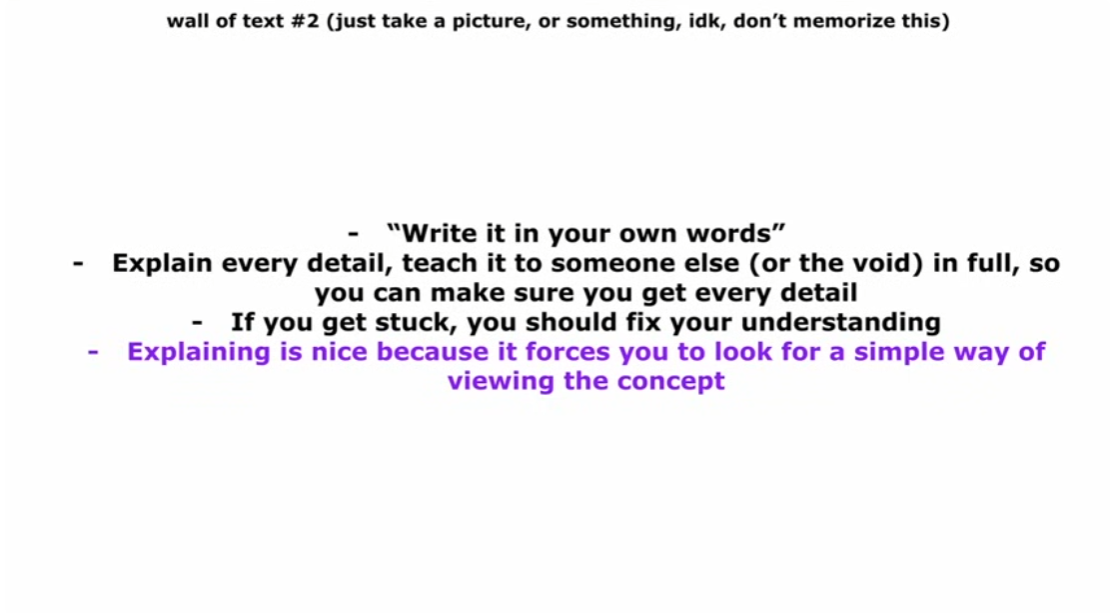
- Explain: Teach the concept to someone else in your own words; if you cannot explain a detail clearly, it indicates a gap in your own understanding that needs to be addressed (12:05 - 12:56).
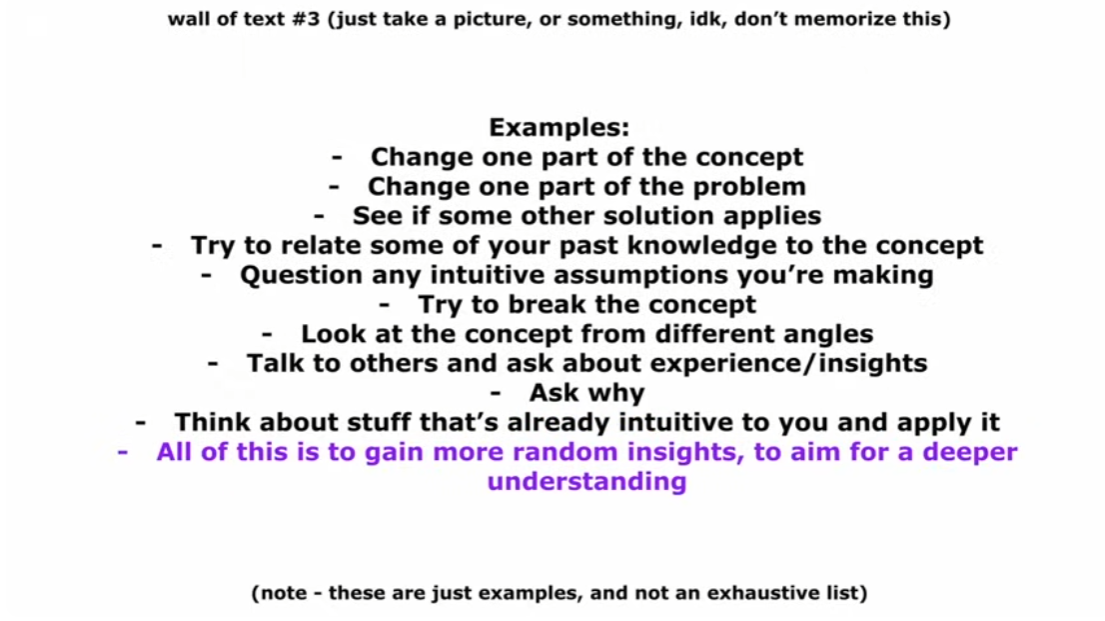
- Explore: Experiment with the concept by asking “dumb” questions, changing variables, or testing its limits to see how it holds up in different scenarios
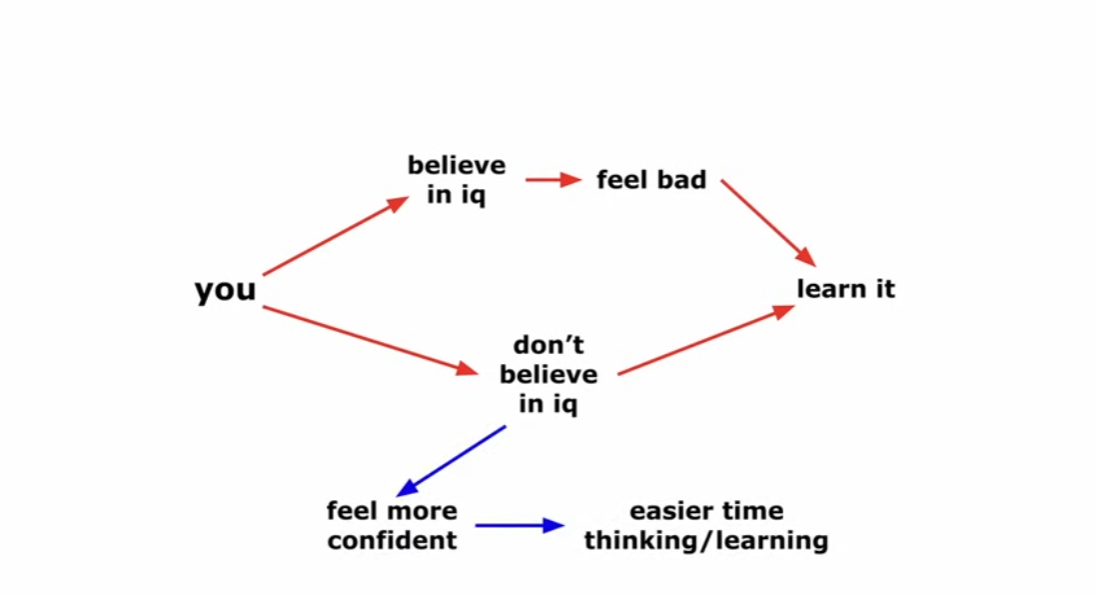
**dont believe in IQ
I am afraid what if I am just again getting distracted only. So for that : 1) I have spent a holiday on this video. 2) i am giving myself 2 weeks to track if this is working or not. Follow up what you learnt and if you have made progress.